
Remnants That Continue, 2025. Mixed Media Installation. بقايا تستمر2025 تركيب فني من مواد مختلفة
ما الذي يمكن اعتباره جزءا من التاريخ؟ ومن يقرر ذلك؟ كيف تخلّد أحداث بعينها بينما تترك أحداث أخرى في طي النسيان؟
يستعيد هذا العمل مشاهدًا حية في الذاكرة، تتقاطع من خلالها أحداث نعايشها عن قرب، مع أحداث أخرى كانت بعيدة عنا، في محاولة للكشف عن العلاقة بين الذاكرتين الشخصية والجمعية، وبين المسار الفردي، وما يُصنف بأنه حدث تاريخي.
يتجسد العمل على هيئة “صندوق فرجة تتبدل فيه الأدوار بين اللحظات العابرة والأحداث الكبرى، حيث تصبح اللحظة حدثًا، ويختزل “التاريخ” في صور تقدم وكأنها مجرد تفاصيل حياة يومية.
Mixed Media Installation.
Who decides what becomes history; which events are monumentalised and which are forgotten?
Through his own memories, the work revisits both distant and personal events, assembling scenes where the gravity of history meets ones own lived trajectory.
Presented as a diorama, where the immense and the minute collide, the work reflects on the shifting measure of significance; where the smallest moments are elevated to the monumental, and what should never be ordinary is made to appear so.
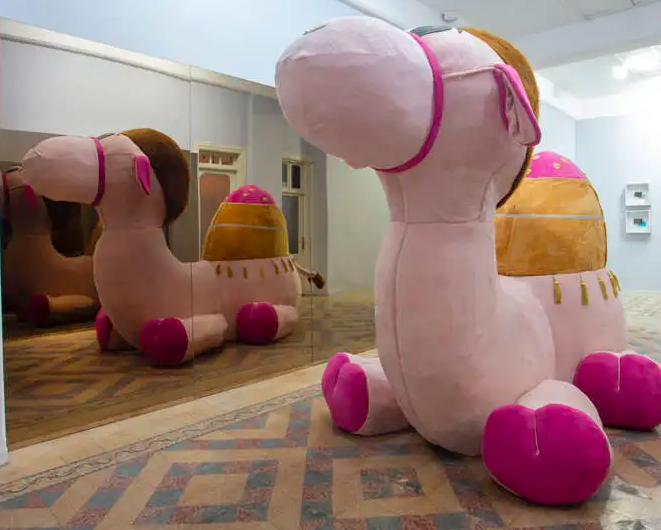
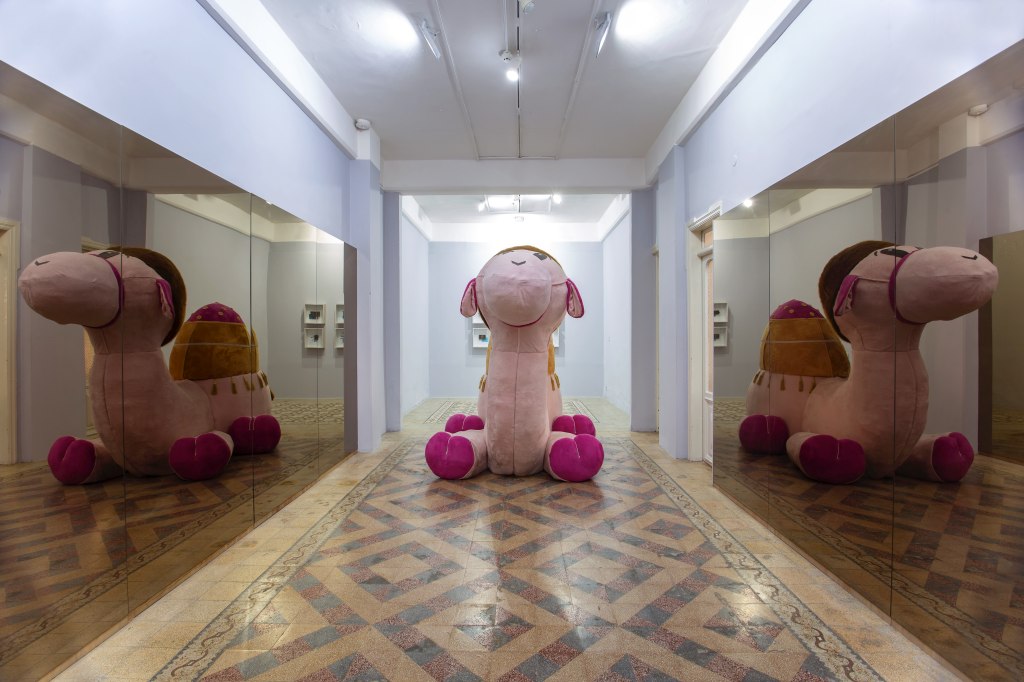
Camel in the room 2020, mixed media 350 x 130 x 250 cm, with dark mirrors on both sides, The blue house, Darat Al Funun, Amman
Referencing the proverbial elephant with a twist, A Camel in the Room makes us reflect on major issues that are not discussed or acknowledged. Set in a mirrored room, the work aims to provoke the viewer by using irony, thereby shedding light and generating debate on taboo subjects.
The eponymous camel is the unavoidable element confronting the viewer upon entering the space. Derived from an early 19th century Russian fable, made proverbial by Dostoevsky in his novel Demons, the ‘elephant in the room’ has been transformed into a grand scaled-up version of the pink plush toy camels found in souvenir shops downtown Amman, Jordan, reminding us to directly confront the pressing issues of our here and now.
في إحالة إلى المثل الشائع «الفيل في الغرفة» مع تحوير دلالي، يدعو عمل الجمل في الغرفة إلى التأمل في القضايا الكبرى التي لا يجري التطرق إليها أو الاعتراف بها. أُقيم العمل داخل غرفة مكسوّة بالمرايا، ويحاول إثارة السؤال عبر توظيف المفارقة، بما يسلّط الضوء ويولّد نقاشًا حول موضوعات قد تكون محرّمة الجمل الذي يحمل العمل اسمه هو العنصر الذي لا يمكن تجاهله، ويواجه المتلقي فور دخوله إلى الفضاء. وهو مستمد من حكاية روسية تعود إلى أوائل القرن التاسع عشر، تحوّلت إلى مثل شائع على يد دوستويفسكي في روايته الشياطين، حيث جرى استبدال «الفيل في الغرفة» بنسخة مكبّرة على نحو لافت لجِمال وردية محشوة، شبيهة بتلك التي تُباع في محال الهدايا التذكارية في وسط عمّان، الأردن، وفي عدة عواصم عربية. يذكّرنا ذلك بضرورة مواجهة القضايا الملحّة لزمننا الحاضر مواجهة مباشرة

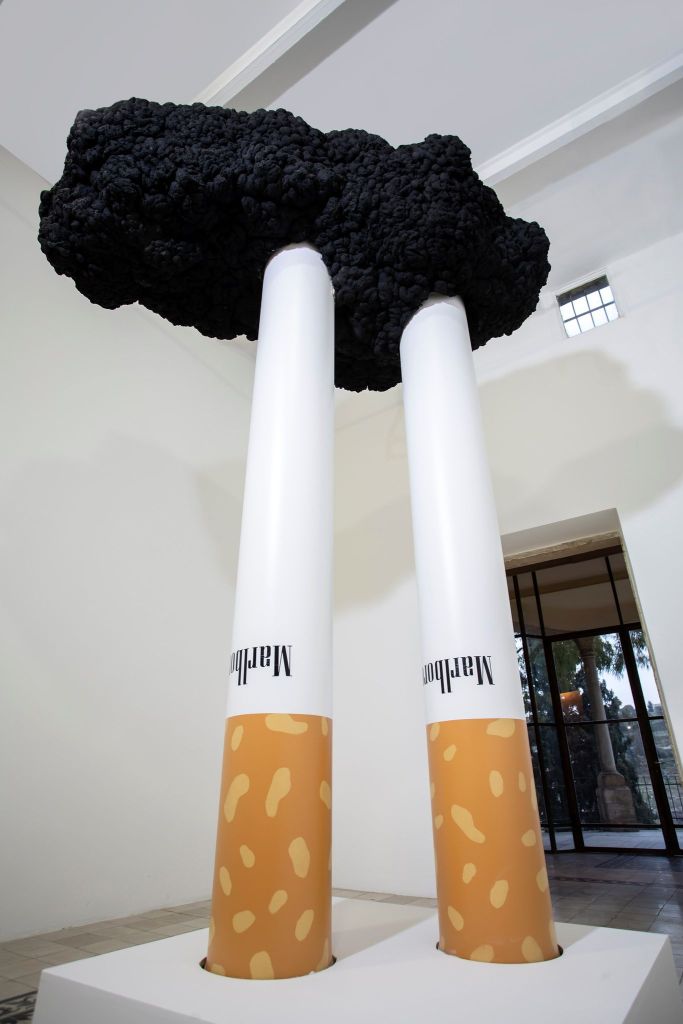
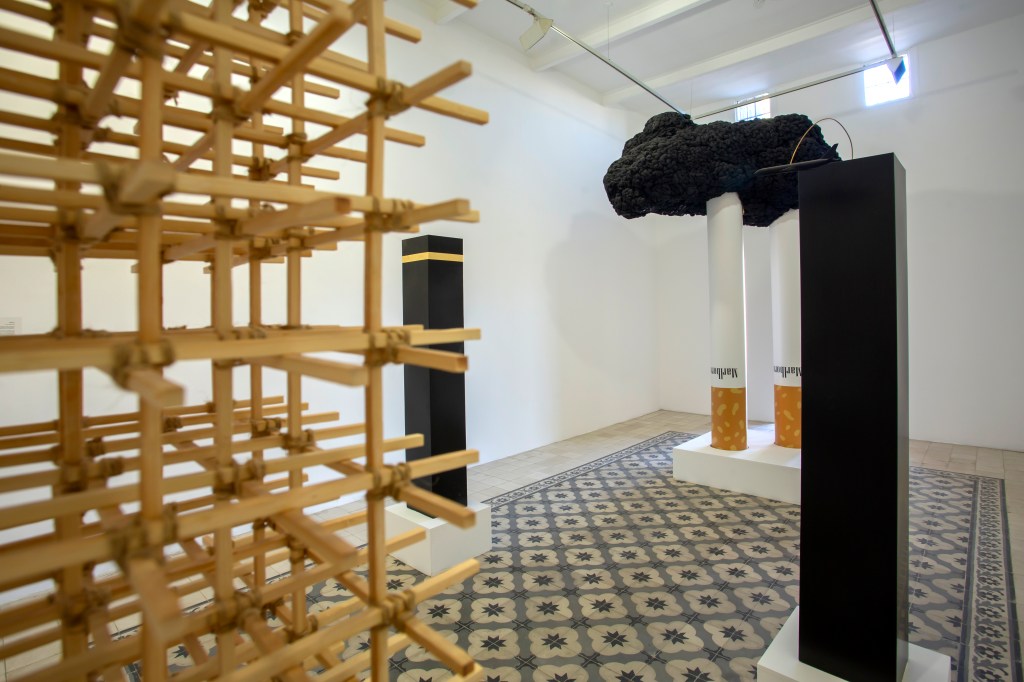
– Marlboro cigarettes “you Decide”, mixed media, 320x180x440 cm أبراج، سجائر مارلبورو 2020، وسائط متعددة
– A tower with golden stripe, painted stainless steel and gold leaf, 45x45x180cm برج مع شريط ذهبي 2020، فولاذ مقاوم للصدأ مطلي وورق ذهب،
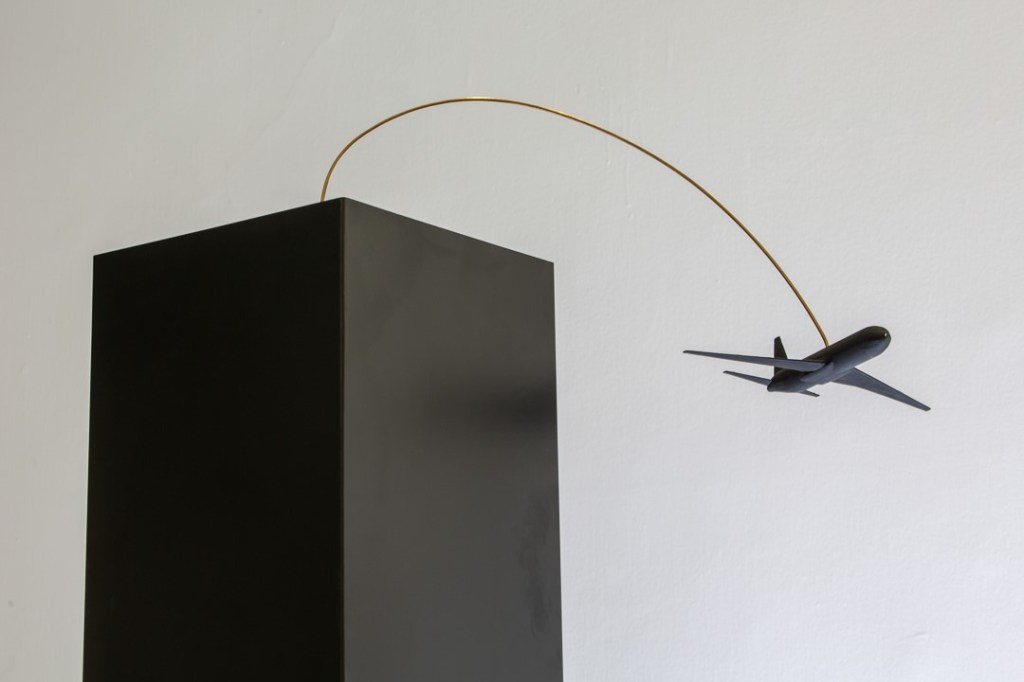
– A tower with airplane, painted stainless steel electrical motor, thermoplastic 95x95x210cm برج مع طائرة 2020، فولاذ مقاوم للصدأ، محرّك كهربائي، مادة لدنة حرارية
– Scaffolding, wood, Jute string, 47x47x182cm سقالة 2020، خشب، خيوط جوت
Towers, is a collection of works that might be thought-provoking and emotionally charged. The installation is composed of four monumental works, each is crafted to emphasize the impact of the events of 9/11 on our modern world. This installation aims to shed light on the seismic shifts and the polarization that have come to define contemporary politics during what some have termed the ‘Age of Terror.’ Through subtle yet powerful interventions on the symbolic representations of the Twin Towers, the work challenges viewers to confront the fundamental question: “Whose terror?”
أبراج، هي مجموعة أعمال. تتكوّن هذا الأعمال التركيبية من أربعة أعمال كبيرة نسبيا، صيغ كلّ واحد منها للتأكيد على أثر أحداث الحادي عشر من أيلول/سبتمبر في عالمنا المعاصر. يسعى هذا العمل إلى السؤال عن التحوّلات الكبيرة وحالات الاستقطاب التي باتت تُميّز السياسة المعاصرة خلال ما اصطلح بعضهم على تسميته بـ«عصر الإرهاب». ومن خلال تدخلات دقيقة في التمثيلات الرمزية لبرجيّ التوأم.
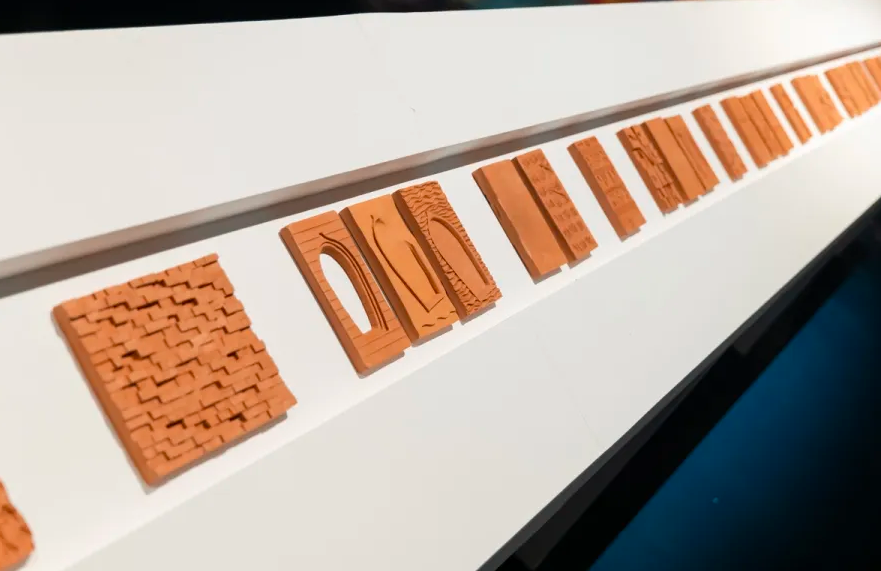
Scripted Tablets, is a set of 45 engraved terracotta clay sculptures that explores the relationship between the communication of history and the socio-political environments at the time of its telling. Through this work, the artist retells history by introducing new elements into established narratives. New readings of history are produced through the acts of making and rearranging.
ألواح مكتوبة هي مجموعة من 45 منحوتة من الطين الفخّاري المحفور، تستكشف العلاقة بين نقل التاريخ والبيئات الاجتماعية-السياسية السائدة في لحظة سرده. من خلال هذا العمل، يعيد الفنان رواية التاريخ عبر إدخال عناصر جديدة إلى السرديات القائمة. وتنتج قراءات جديدة للتاريخ من خلال عمليّات الصنع وإعادة الترتيب.

1- Clockwise, 2- Compass. 3- Disoriented.
اتجاهات، أو توجهات 2018، المينيوم وحديد ومحرك كهربائي ودارات كهربائية وأردوينو. 1- مع عقارب الساعة. 2- بوصلة. 3- مشوش.
As users approach the installation, they’ll notice that these structures don’t behave like ordinary signs. They are mounted on mechanisms that allow them to rotate and move in seemingly random, unpredictable patterns or in peculiar behavior. “Disoriented” embodies the essence of chaos, spinning erratically, while “Clockwise” seems to adhere to a steady, clockwise motion, giving a sense of order. “Compass” takes an unexpected twist by occasionally pointing in different directions, making it an enigmatic blend of purpose and confusion.
عند اقتراب الزائر من العمل التركيبي، يلاحظ أن هذه البُنى لا تتصرّف كالإشارات التقليدية. فهي مُثبّتة على آليات تتيح لها الدوران والحركة بأنماط تبدو عشوائية وغير متوقعة، أو بسلوكيات غرائبية. يجسّد عمل “مُرتبك” جوهر الفوضى من خلال دورانه غير المنتظم، في حين يبدو “مع عقارب الساعة” ملتزمًا بحركة ثابتة باتجاه عقارب الساعة، بما يمنح إحساسًا بالنظام. أمّا “بوصلة” فتأخذ منحى غير متوقّع، إذ تشير أحيانًا إلى اتجاهات مختلفة، لتغدو مزيجًا غامضًا من الغاية والارتباك.
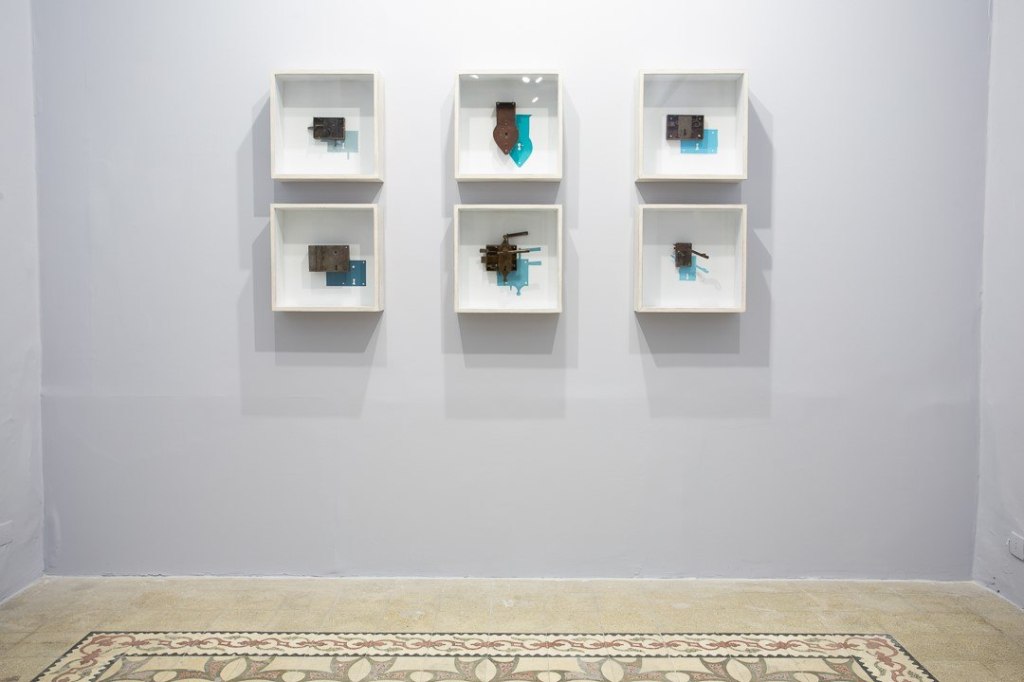
Last used to turn the lock before fleeing their home, the key has become a powerful symbol keeping alive Palestinian hope to return one day. In this work, the artist shows the other side: the now rusty locks patiently awaiting their owner’s come-back, a symbol of history that stretches out into the future as well as the past.
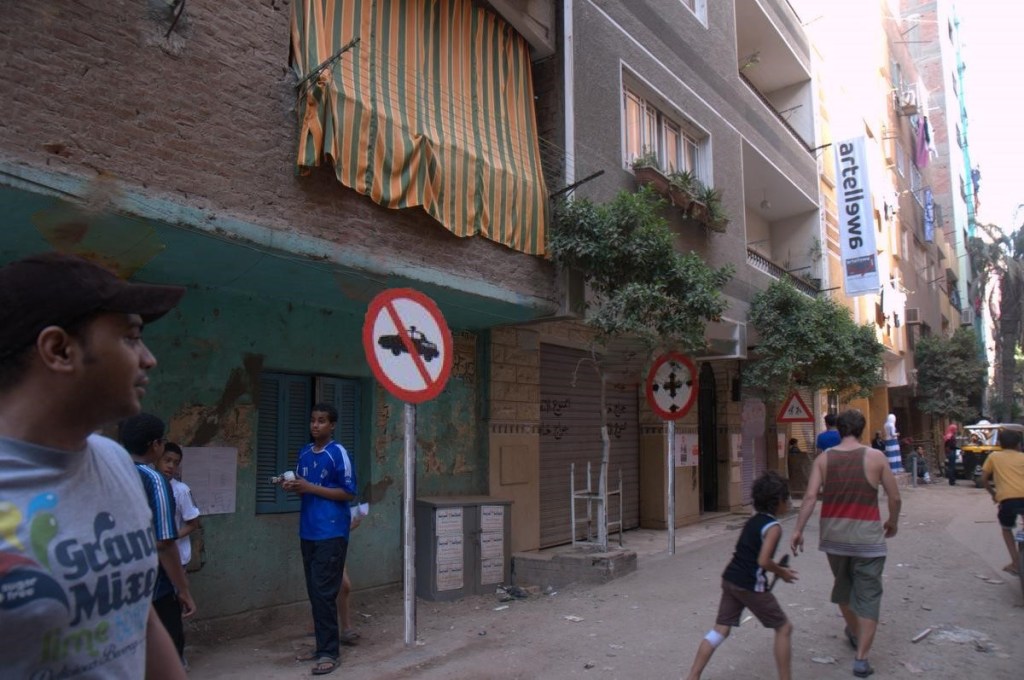
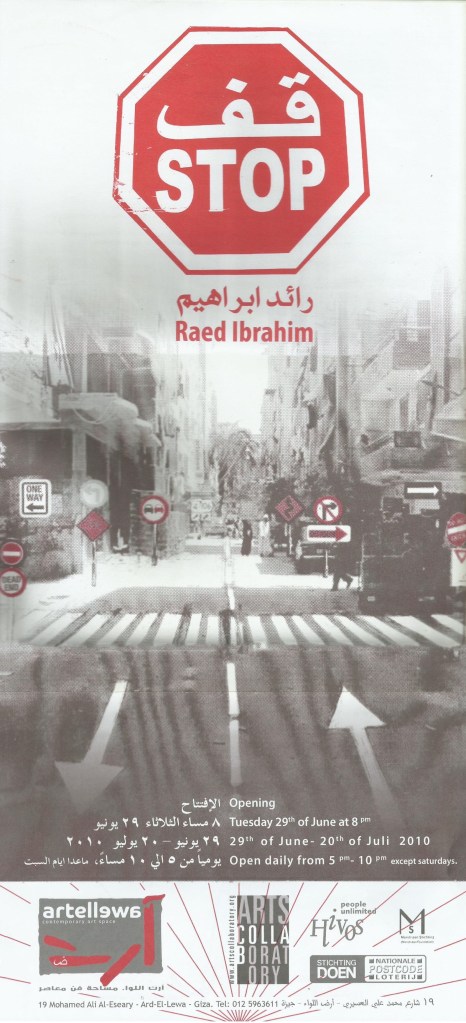
A series of original traffic signs suspended outside in the area of Ard Ellewa, in Cairo around the Art Ellewa art space, re-establishes the social and civic order–often lacking in the chaos of Cairo, the city that never sleeps–by alerting the viewer to the dangers of people thinking and questioning. The signs serve different functions: one forbids police from entering a particular street; another urges people to pick the direction they want.
“Stop” allows one to choose by establishing order, giving one the right to think and decide in a world that makes sense–as opposed to the chaos that suffocates people’s freedom instead of giving them the privilege to do what they want.
سلسلة من إشارات المرور شبه الأصلية نصبت في الممساحة العامة في منطقة أرض اللواء بالقاهرة، حول فضاء (آرت اللوا)، لتعيد أو لتنتج بعض أشكال النظامين الاجتماعي والمدني – للذين غالبًا ما يغيبهما الاضطراب في فوضى القاهرة، المدينة التي لا تنام – وذلك عبر تنبيه المار إلى مخاطر التفكير وطرح الأسئلة. تؤدي هذه الإشارات وظائف مختلفة: إحداها تمنع الشرطة من دخول شارع معيّن، وأخرى تحثّ الناس على اختيار الاتجاه الذي يرغبون فيه.
يدّعي عمل “توقّف” إمكان الاختيار من خلال إرساء النظام، ومنح الفرد حق التفكير واتخاذ القرار في عالم يمكن فهمه، في مقابل الفوضى التي تخنق حرية الناس بدلًا من أن تمنحهم امتياز القيام بما يريدون.
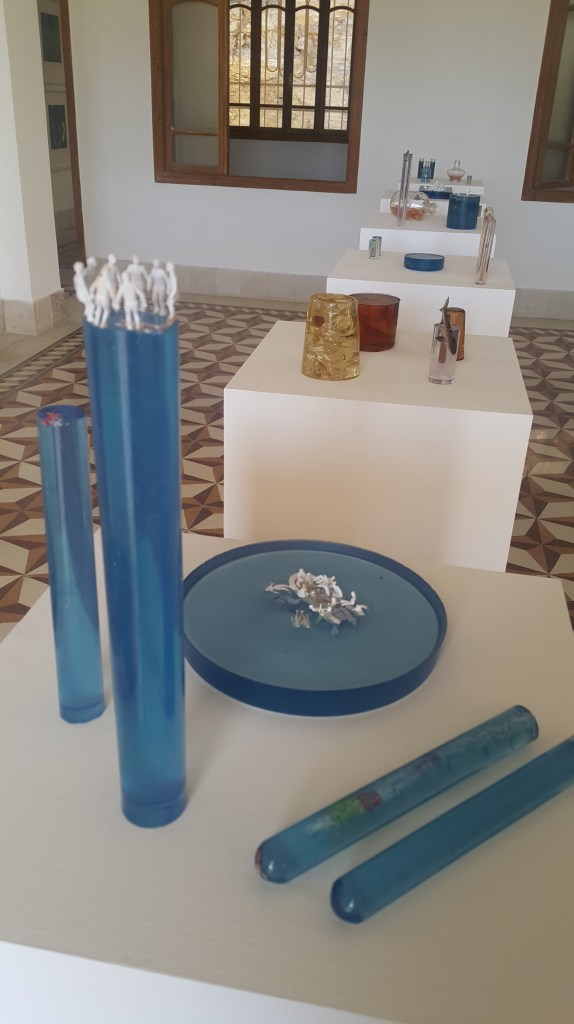
Mass with a higher density than water sinks, and mass that has a lower density than water floats. If a body floats, its density is less than the density of the fluid, and it dives if its density is greater than the density of the fluid. However, if the density of the body is equal to the density of the liquid, the body remains suspended.
– Body mass is constant in any place and at any temperature.
– Size varies according to temperature; volume increases as temperature increases, and decreases as temperature decreases.
– The density of mass decreases as the temperature increases and increases as the temperature decreases.
– Density is a unique physical property of a material at constant temperature.
– If the characteristic density changes, this is evidence that the substance is not pure.
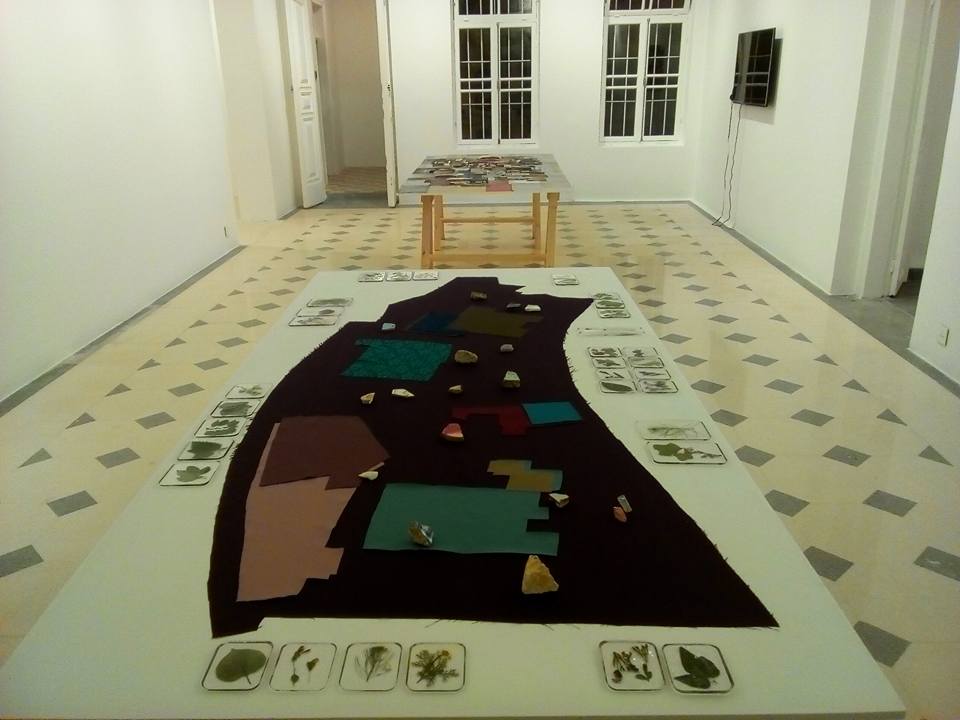
How to reproduce of the present in a contemporary society with looming uncertainties, or when history is constantly being excavated, (re)written, or discarded. An urban site in Jabal Amman carries social and historical significance; its buildings are witnesses to changes of time and to different occupants leaving spectral traces behind. This project is an excavation of absences, and a re-piecing of fragmented findings, produced as an archival exhibition. On display are objects collected from the site: hinges, bolts, pieces of walls, plants, personal belongings, religious icons, and graffiti transfers. It also notes the narratives, archival materials, sounds and images that surfaced during the research. The exhibition presents the research and artworks by Raed Ibrahim, and interventions by Mohammed Zakaria, Yousef Qawar, and Ammar Khammash.
كيف يمكن إعادة إنتاج الحاضر في مجتمع معاصر تشوبه التجاذبات، أو يعاد فيه نبش التاريخ أو إعادة كتابته أو التخلي عنه؟ يحمل موقع حضري في جبل عمان أهمية اجتماعية وتاريخية؛ تشهد مبانيه على تغير الزمن وتتابع قاطنيه، أو أطياف تركوها وراءهم. هذا المشروع هو تنقيب عن الغيابات، وجمع قطع متناثرة وجدت في الحاضر، وتقدم هنا كأرشيف. جُمعت المعروضات في الأرشيف من الموقع: خرداوات وكسرات جدران ونباتات ومتعلقات شخصية ورموز دينية وطبعة جرافيتي. كذلك يولي الأرشيف اهتماما بالقصص والمواد التاريخية والأصوات والصور التي ظهرت أثناء عمل البحث في الموقع. ينظر هذا الأرشيف المرّكب في شكل استعمال المباني خلال التحولات الاجتماعية في المدينة. يقدم المعرض بحثاً وأعمالاً فنية من تنفيذ رائد إبراهيم، وكذلك مداخلات لمحمد زكريا ويوسف قعوار و عمار خماش

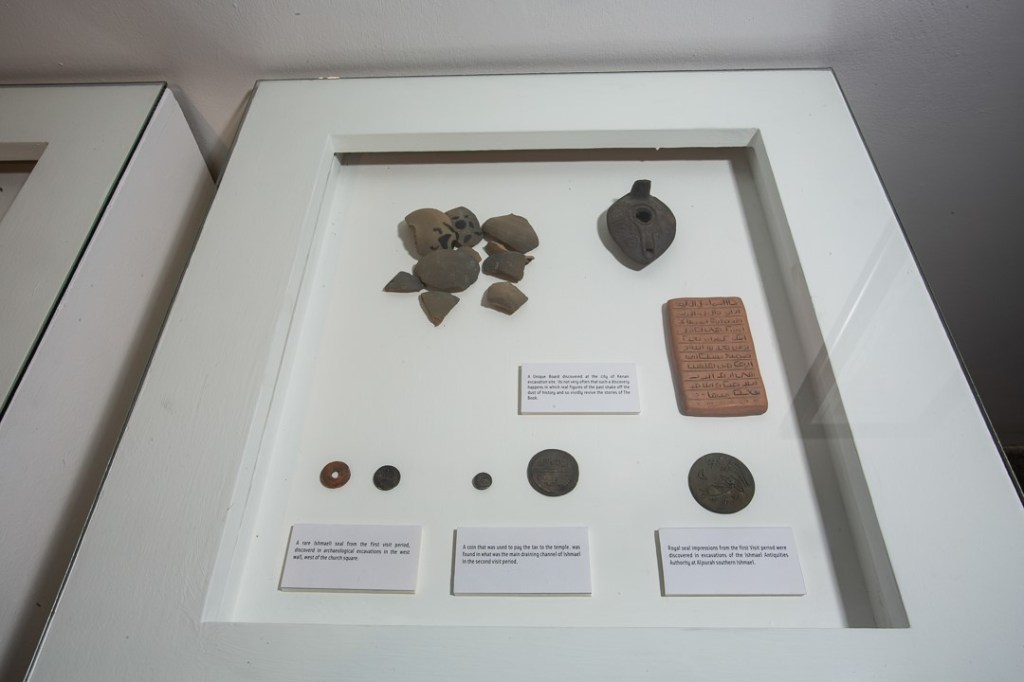
The 13th of August 2009 marked the declaration of the founding of the State of Ishmael in the canton of Aarau. The ceremony to proclaim independence was held in Aarau City’s church square, currently known as Ishmael City. During the ceremony, the letter of declaration was publicly announced and a presentation of historical artefacts, confirming the legacy of the people of Ishmael was on display. The land of Ishmael is the birthplace of the Ishmaeli people. Here they first aspired to statehood, created cultural values of national and universal significance and gave the world the eternal “Book of Testimonials.” After being forcibly exiled from their land, the people of Ishmael kept faith throughout their dispersion and never ceased to pray in the hope of freedom and return.
The State of Ishmael: Jus sanguine 2010, an installation at Darat al Funun, Amman, includes the Declaration flyer, archaeological assets and publications, documentary films, as well as applications for citizenship to the State of Ishmael.
شكّل الثالث عشر من آب/أغسطس 2009 تاريخ إعلان تأسيس دولة إسماعيل في كانتون آراو. أُقيمت مراسم إعلان الاستقلال في ساحة كنيسة مدينة آراو، التي تُعرف اليوم باسم مدينة إسماعيل. وخلال المراسم، أُعلن بيان الاستقلال على الملأ، كما قُدِّم عرض لمقتنيات تاريخية تؤكّد إرث شعب إسماعيل.
تُعدّ أرض إسماعيل مهد الشعب الإسماعيلي؛ ففيها تطلّعوا لأول مرة إلى تأسيس دولتهم، وابتكروا قيَمًا ثقافية ذات أهمية وطنية وإنسانية، وقدّموا للعالم «كتاب الشهادات» الخالد. وبعد تهجيرهم قسرًا من أرضهم، حافظ شعب إسماعيل على إيمانه طوال فترة الشتات، ولم يتوقّف عن الصلاة أملًا في الحرية والعودة.
دولة إسماعيل: حقّ الدم (Jus sanguine) 2010، هو عمل تركيبي عُرض في دارة الفنون، عمّان، ويضم منشور إعلان الاستقلال، وموجودات أثرية، ومنشورات، وأفلامًا وثائقية، إضافة إلى طلبات الحصول على جنسية دولة إسماعيل.

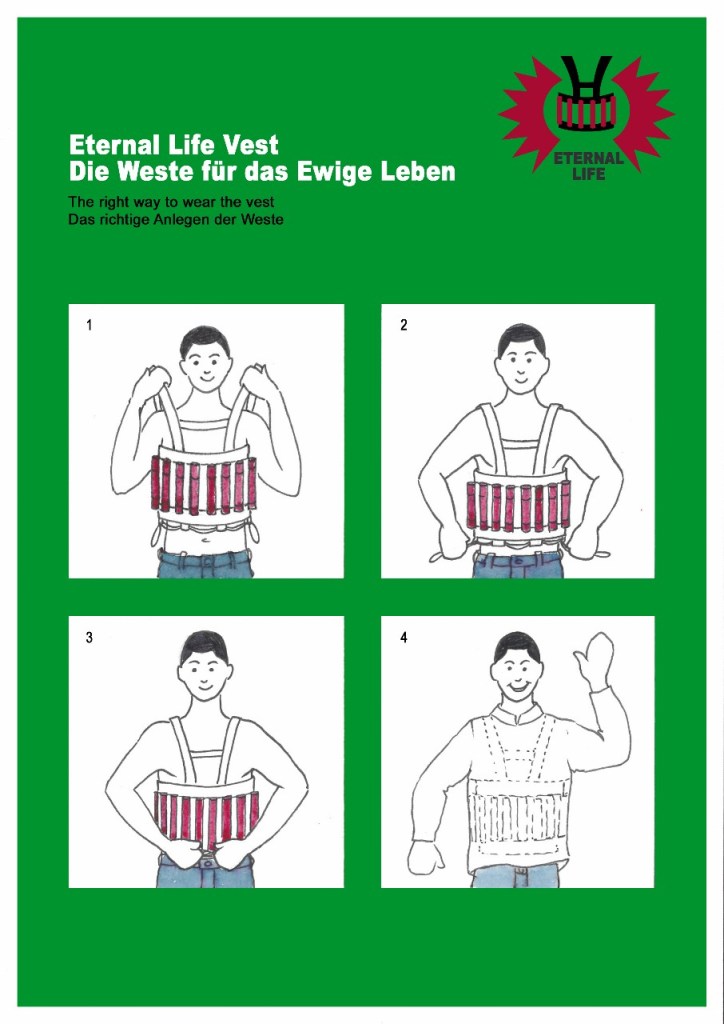
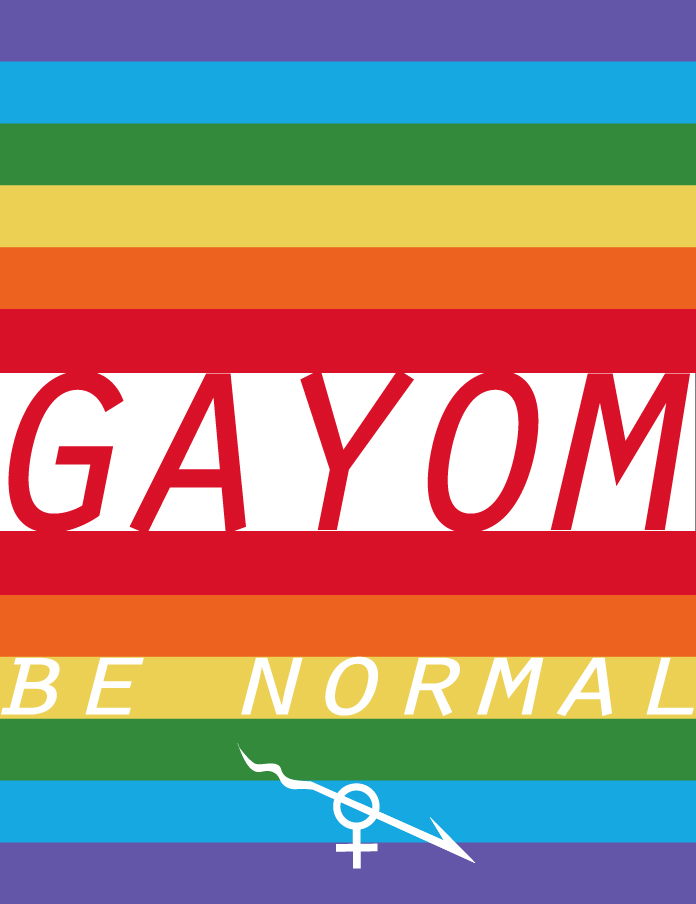
proposes remedies to cure “social and political diseases”. It tackles topics that constitute tensions in Arab societies, questioning their norms and the global consumer system. This work presents a suppository to cure “ailments such as extremism, Islamophobia, homosexuality, and so on, using pharmaceutical format.
For each of these ‘ills,’ the artist has devised a medicine to be administered orally or topically. Contained in realistic packaging and accompanied by leaflets, in pill, liquid, or gel form, every one of them named medicines satirically provides an instantaneous cure. The medicines are complemented by bold promotional posters – inspired by the aesthetics of 1970s design – that boast acidic colors and scathing slogans.
يقترح هذا العمل علاجات لشفاء «الأمراض الاجتماعية والسياسية». يتناول موضوعات تُشكّل بؤر توتّر في المجتمعات العربية، ويُخضع معاييرها ونظام الاستهلاك العالمي للمساءلة. مما يقدّم العمل أدوية لمعالجة «علل» مثل التطرّف، ورهاب الإسلام، والمثلية الجنسية، وغيرها، وذلك من خلال توظيف الصيغة الدوائية.
ولكل واحدة من هذه «العلل» تم ابتكار دواءً يُعطى فمويًا أو موضعيًا. تأتي الأدوية ضمن عبوات واقعية ومرفقة بنشرات إرشادية، على هيئة أقراص أو سوائل أو مواد هلامية، وتحمل جميعها أسماء دوائية شبه واقعية توفّر، بحسب الادعاء، علاجًا فوريًا. وتُستكمل هذه الأدوية بملصقات ترويجية جذابة…أو تحاول أن تكون.
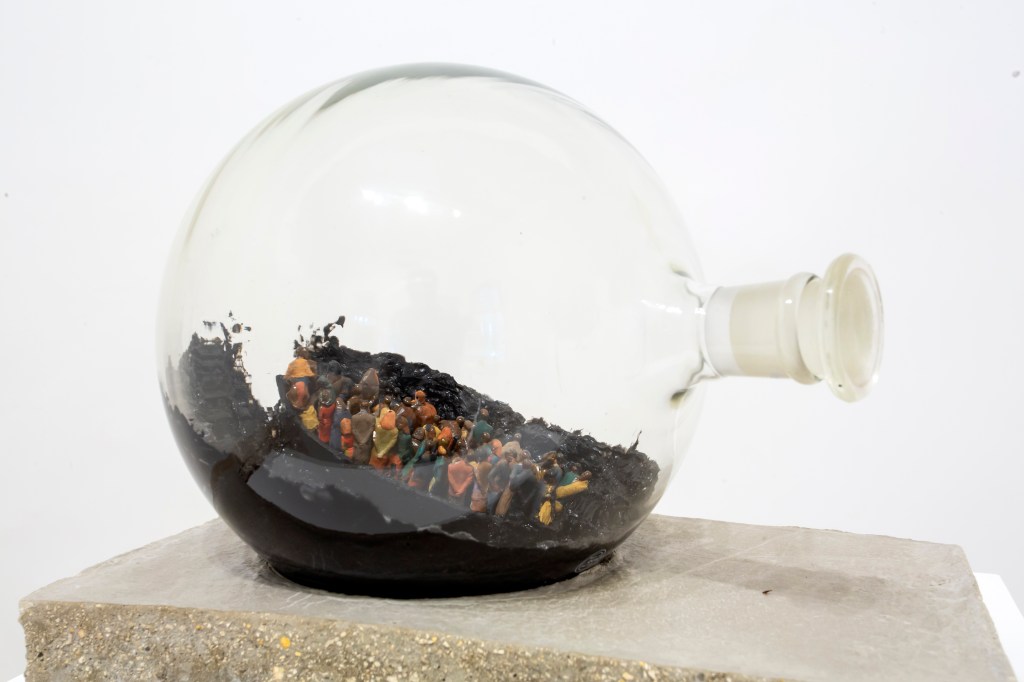
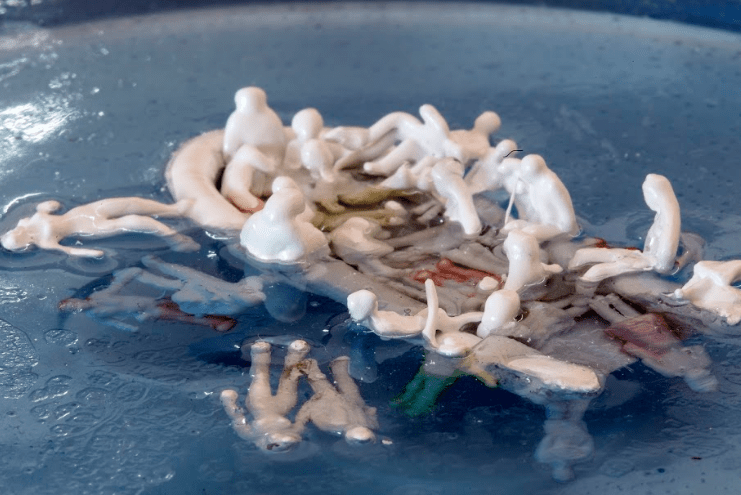
A ship in a bottle represents the impossible: containing an object that does not appear to fit through its neck. The work subverts the message by capturing in glass the vessels used by migrants and refugees trying to cross the see in the hope of a better future

A miniature scaffolding in cubic shape. It is a right cube from the outside, and the Kaaba measurements from the inside, the void is where the walls actually is.
Mu’allaqat is the name given to a collection of poems of some poets from the pre-Islamic Arabic era, it means ‘things that are hanging’.
Muallaqat represent the boundary between pre- and post-call, while the scaffolding invites us to differentiate between construction and non-construction, to show the void which is the actual work that hold and represents the borders between time and ideas. The poem crosses borders even without the need of the platform that use to hold it or to host it.
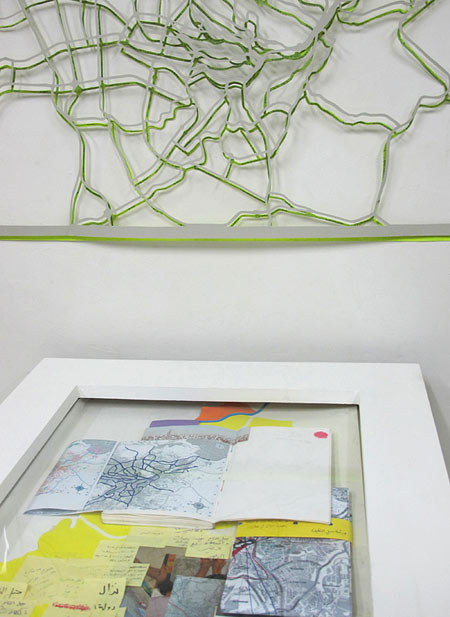
The work resulted from a workshop held in Jabal Natheef, Amman, involving 40 participants. Together, the artist and participants selected personal and public spaces in Amman of significance to them, analyzing the uses and specifics of each. Ibrahim then redrawed a map similar to the standard tourist maps of the city, using the selected sites.
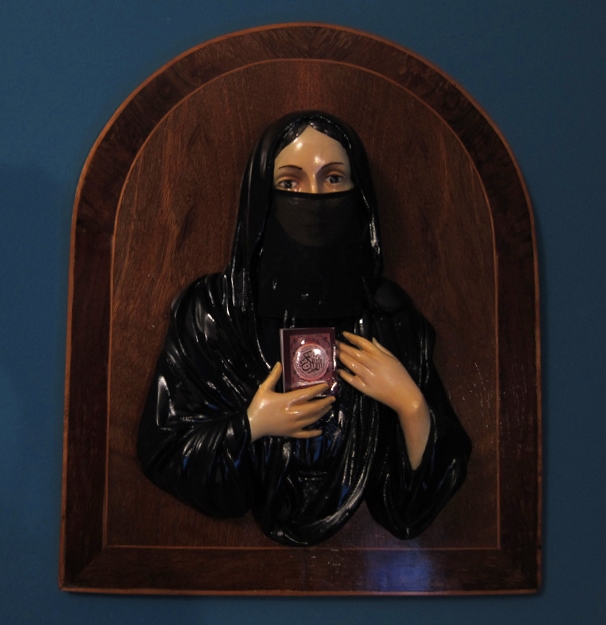
The Virgin Became Muslima’ is a painted plaster sculpture that reimagines an iconic religious figure in a contemporary context. In this piece, the Virgin Mary is depicted holding a Quran, symbolizing her conversion to Islam, and she is veiled with a Niqab, a traditional Muslim face covering. This juxtaposition of religious symbols challenges the notion of contemplate themes of faith, identity, and the intersection of cultures and religions in a rapidly changing world. The sculpture aim to capture the complexity of religious transformation and adaptation while evoking a sense of reverence and curiosity
Share this:
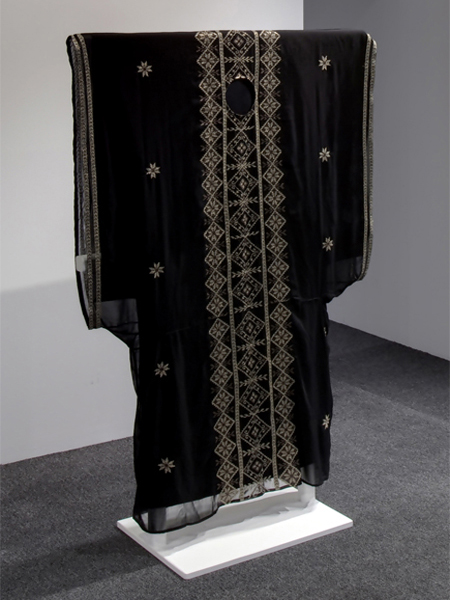
A hybrid of a traditional Kuwaiti dress with Palestinian cross stitch.
The viewer must look closely at the decorative details of Dress to see how its usual Kuwaiti patterns have been replaced with designs from traditional Palestinian cross stitch.
The neck opening of this Palestinian/Kuwaiti dress has also been
considerably shrunk so much so that it becomes impossible to wear and leaves one only with the possibilities of remaining outside or lying beneath its cover.

Step into the realm of The Dissent Boutique, this artwork, resembling a traditional shopfront, try to the conventional boundaries of consumerism while addressing the needs of those fueling protests, uprisings, and revolutions around the world.
The vitrine proudly displays an variety of products tailored to meet the demands of individuals championing democratic change. From eye-catching banners and placards to symbolic attire and essential protest gear, every item is not just an accessory but a potent tool for expression and resistance.
In a world where the pursuit of democracy and justice often clashes with the forces of oppression, “The Dissent Boutique” serves as a commentary on the role of consumer culture in shaping the narratives of resistance. It challenges us to consider the power dynamics inherent in the supply and demand of tools for change, asking whether a revolution can be packaged and sold or if it inherently defies commodification.






 Raed Ibrahim رائد ابراهيم